Key insights
- Japan’s decision adds to the sanctions that are being placed on Garantex.
- The exchange has already had problems because of actions taken by the US and European countries.
- New platforms that come after the original one could still be a problem because officials are trying to follow the movement of cryptocurrency activities.
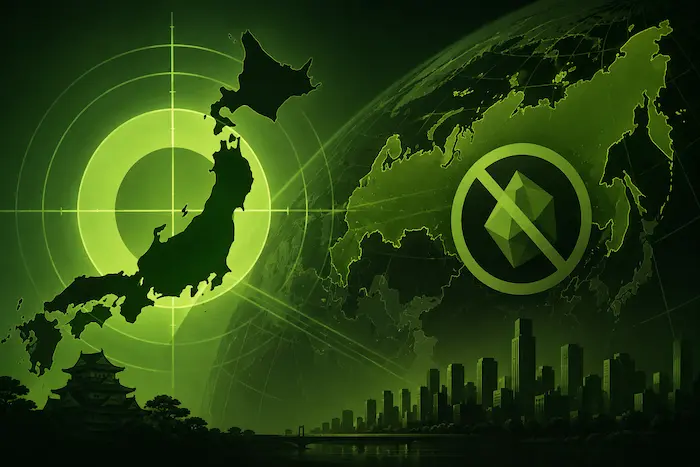
Japan has sanctioned Garantex as part of a set of measures targeting 33 Russian entities and nine individuals. These new financial restrictions were announced on October 2. The package also includes 35 ships and stronger controls on payments capital movements and certain services connected to Russia.
This action puts Garantex under Japan’s asset-freeze system. It now requires permission, for any payment involving designated parties.. Japan did not say how much money or assets tied to Garantex are currently held in its territory.
Japan Imposes New Sanctions on Russia, Adds Crypto Exchange Garantex to Asset Freeze List
On October 2, the Japanese government announced a new round of sanctions against Russia, designating 33 entities and nine individuals—including Russian cryptocurrency exchange… pic.twitter.com/7xs79Ifgu2
— Wu Blockchain (@WuBlockchain) October 4, 2026
Tokyo expands financial restrictions
Japan’s ministry of foreign affairs Ministry of finance and Ministry of Economy, Trade and Industry announced measures after a Cabinet decision.
The sanctions appendix names Garantex Europe OU. Shows Garantex as an alias. The document also provides addresses in Moscow and St. Petersburg associated with the designated entity.
Under the new rules, Japanese parties need government approval before making payments to designated organizations or individuals. The restrictions also cover certain capital transactions involving deposits, trusts, and loans.
The package extends beyond financial activity. Japan also imposed restrictions affecting 35 vessels associated with Russia’s so-called shadow fleet.
Services linked to those vessels now face permission requirements. There are also extra controls on financing arrangements such as sales and purchase, leasing and chartering.
Garantex already faced international action
Japan’s designation follows several major enforcement actions against Garantex in the United States and Europe. Treasury said that more than $100 million, in known transactions involved actors and darknet markets.
The agency later sanctioned Garantex again in August 2025. At that time, Treasury linked the exchange to ransomware operators and other cybercriminal activity.
The European Union added Garantex to its sanctions framework in February 2025. EU authorities described the exchange as closely associated with sanctioned Russian financial institutions.
Authorities then disrupted Garantex’s infrastructure in March 2025. US, German, and Finnish agencies seized domains and servers linked to its operations.
The Justice Department later charged the administrators of Garantex. Said that the exchange handled at least ninety‑six billion dollars, in cryptocurrency transactions since April two thousand nineteen.
That figure represents the transaction activity and should not be mixed up with the smaller volume that US authorities tied directly to illicit actors.
Successor networks complicate enforcement
The international crackdown did not end the wider network surrounding Garantex.
After the 2025 seizures, US authorities said customers and funds moved toward Grinex, which they described as a successor platform. Treasury later sanctioned Grinex and several individuals connected to Garantex.
Blockchain experts also said that crypto platforms, under investigation can set up backup systems before sanctions hit. These setups let customers, money and operations shift fast when needed.
The issue became more significant after US authorities targeted the A7 Network on October 1, one day before Japan announced its latest sanctions.
Treasury described A7A5 as a ruble-backed token associated with the network. FinCEN separately said A7 sub-agents processed more than $17 billion between January 2025 and June 2026.
That figure relates to A7 activity rather than Garantex transaction volume. The distinction matters because the two figures measure different networks and activities.
Japan increases pressure on crypto links
Japan’s move adds another major jurisdiction to the sanctions regime surrounding Garantex. For crypto companies with Japanese exposure, the designation creates another compliance requirement involving counterparties and financial transactions.
The exchange had already faced severe operational disruption before Tokyo acted. Therefore, the immediate effect on trading activity may remain limited.
More important is the broader significance of coordination among major jurisdictions. US and European authorities previously targeted Garantex, while Japan has now added its own restrictions.
The package also connects financial enforcement with shipping controls. Japan’s measures against 35 vessels show that Tokyo is targeting several channels that can support Russian trade and sanctions evasion.
The vessel restrictions include a limited transition period for certain contracts signed before October 2. Those arrangements can continue only for obligations performed before November 1, 2026.
Conclusion
Japan’s move brings Garantex in to a broader sanctions list of Russian entities, people and ships. The measure will reduce the financial transactions and add an additional compliance burden for companies with multi-jurisdictional operations.
In addition, the history of Garantex also shows how tough it is to enforce sanctions against crypto networks. Its infrastructure was interfered with in earlier actions, but subsequent actions identified successor platforms and financial channels.
This designation is a broad statement, and not just in relation to the exchange. It is designed to help implement international measures to curb sanctioned Russian financial activity and to see if coordinated action can keep up with the rapidly evolving crypto infrastructure.