

The Digital Crime Task Force was formed by Tron, Tether, and Chainalysis on November 12, 2026, in an attempt to detect and halt the financial crime related to cryptocurrencies. This collaboration centers on the suspicious activities related to the transfer of USDT via Tron through the process of monitoring and information sharing in order to make it difficult for the criminals to transfer their illegal funds.
In this context, the initiative is being introduced amid growing concerns about scams that are conducted using artificial intelligence technology.
According to the research by Chainalysis, AI-linked scams earned significantly more money in 2025 than before. This is also part of the termination of a previous collaboration on crime-fighting among Tron, Tether, and TRM Labs.
Digital Crime Task Force Specializes in USDT Token Transactions
The newly formed digital crime task force is focused on the financial transactions that involve the use of USDT tokens created by Tether on the Tron blockchain network.
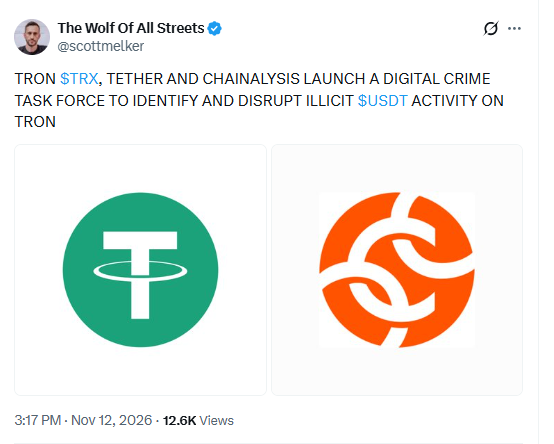
Source: Scott Melker
Each member plays a unique part in the partnership. For instance, chainalysis uses blockchain analytics and investigative tools to track and assess any transactions. Chainalysis also watches how funds move through crypto addresses. Meanwhile, Tron has to provide the blockchain network that is used for the USDT token transactions.
In comparison to Tron and Chainalysis, Tether has an entirely different role in this partnership since it is the issuer of USDT tokens and can freeze the tokens for certain addresses.
Among other things, the arrangement seeks to reduce the time lag between the detection of any suspicious transactions and the enforcement actions taken. In some cases, criminals might be able to move their illicit crypto assets from one wallet or exchange to another while the investigation is underway. Intelligence sharing is meant to ensure that this does not happen by responding faster.
The task force will investigate categories of financial crime. The task force will look into investment fraud, romance scams, exchange hacks, terrorist financing and cryptocurrency theft that is blamed on Korean hackers.
However, the announcement on November 12 did not name any asset freezes or completed enforcement cases carried out by the new task force.
The previous partnership with TRM Labs was ended because of coordination problems.
The Digital Crime Task Force comes after the termination of the T3 Financial Crime Unit. The T3 Financial Crime Unit was created by Tron, Tether and the blockchain analysis firm TRM Labs in September 2024.
The old arrangement, however, was also geared towards investigating cryptocurrencies used in criminal activities and coordinating the freeze of these assets. By May 2026, this organization had frozen over $450 million worth of illicit assets in 23 jurisdictions.
Furthermore, the partnership did not continue. Bloomberg reported on November 4 2026 that the alliance had been dissolved following difficulties involving responses and coordination between participating members.
Conclusion
Digital Crime Task Force is the method through which Tron, Tether and Chainalysis aim to cooperate better. AI-powered frauds are on the rise. This is causing growing uncertainty about financial crimes related to cryptocurrencies. That is why the Digital Crime Task Force will use blockchain analysis, share intelligence and freeze USDT accounts that have been found to be involved. The alliance is built upon the disbandment of the T3 Financial Crime Unit which had already frozen more than $450 million worth of assets.
FAQs
What is Digital Crime Task Force?
Digital Crime Task Force is a partnership between Tron, Tether and Chainalysis. The task forces focuses on activities involving USDT on Tron.
Why did Tron and Tether partner with Chainalysis?
Chainalysis provides blockchain investigation and analysis services.
What happened to the T3 Financial Crime Unit?
The former partnership between Tron, Tether and TRM Labs ended in August 2026. However, before it’s closure the unit helped to seize, than $450 million worth of illicit assets.