Key insights
- Financial coverage—Binance says they have a number of ways to recover the funds, including “frozen assets,” “SAFU reserves,” and “annual revenue.
- Investment dispute—CZ says Binance’s SpaceX stake exceeds $1 billion but has not proposed selling it.
- Security investigation—Binance has identified a potentially compromised employee laptop while examining other entry points.
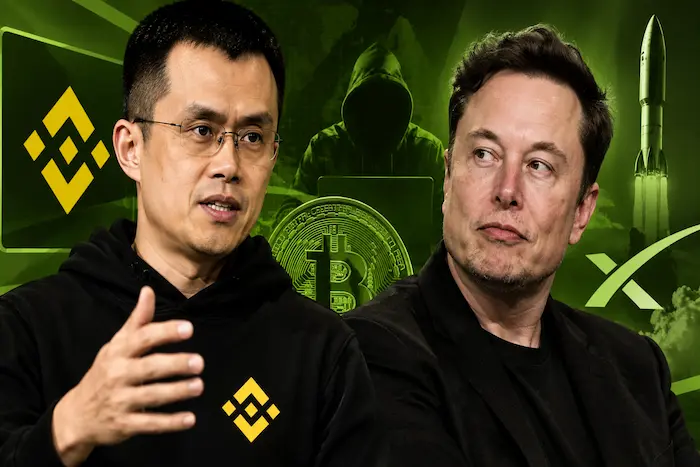
Binance CZ Changpeng Zhao has urged Elon Musk to stop mocking the cryptocurrency exchange after a reported $6.3 billion security breach on October 29. The dispute erupted on X as Binance assessed its losses, tracked stolen assets, and outlined how its reserves and corporate revenue could cover the financial shortfall.
Elon, have a lot of respect for you, but bad time to troll. Please stop.
Our SPCX shares (from our $500m investment in your Twitter takeover) are worth more than a billion.
Would appreciate if you show a little support. Thanks!
— CZ 🔶 BNB (@cz_binance) October 30, 2026
Musk’s remarks trigger public dispute
The confrontation began on October 28 when Zhao warned users against opening email links or downloading attachments. Confrontation stressed that contacts who look trusted could unknowingly spread malware. I saw Musk fire, off fire and laughing emojis drawing attention to the warning. Binance later disclosed its security incident, which made the warning more relevant.
Musk then posted “Everyday is Zeroday” under the discussion of the attack. The remark mentioned zero day vulnerabilities, which attackers use before developers can fix them. Binance’s first check said a worker’s laptop was broken, not a sure zero-day problem.
Zhao later spoke to Musk directly. Told Musk to stop the jokes.
“Elon, I have a lot of respect for you. This is not a good time to troll. Please stop, ” Zhao wrote on X.
Zhao also asked for help pointing out that Binance has money in Musk’s companies. The answer moved focus from the security probe to Binance’s money risk and Binance’s tie, with the billionaire entrepreneur.
CZ outlines Binance’s financial shortfall
Zhao subsequently explained why he had mentioned the investment, presenting a rough calculation of Binance’s potential losses and available resources. The exchange estimated the incident’s impact at approximately $6.3 billion, although the figures did not constitute a final accounting.
According to Zhao, investigators and industry partners had frozen around $3 billion in assets. He also cited Binance’s Secure Asset Fund for Users, or SAFU, which provides an additional financial buffer for emergencies.
His estimates suggested that approximately $2 billion could remain uncovered after accounting for frozen assets and SAFU reserves. Zhao then pointed to Binance’s SpaceX holdings, which Zhao valued at than $1 billion.
Holdings came from Binance’s $500 million investment, in Musk’s 2022 Twitter acquisition. The platform later became X, while the investment gave Binance exposure to Musk’s wider business interests.
Zhao described the remaining gap as manageable, although he acknowledged the financial pain. However, he did not announce plans to sell the shares or present the estimates as a completed recovery assessment.
Yi He rejects immediate share sale
Binance co-CEO Yi He responded to Zhao’s comments by stating that the company’s annual revenue could cover the losses. Her remarks reduced speculation that Binance might need to liquidate its SpaceX investment to meet its financial obligations.
“Reporting to the major shareholder. Our company’s revenue for the year is sufficient to cover the losses, so we do not yet need to sell the SpaceX shares you are bullish on,” Yi He wrote.
Zhao clarified that he had never proposed selling the holdings. Instead, he said he referenced their value to demonstrate Binance’s financial resources and reassure stakeholders.
The exchange has also pledged to cover customer losses through SAFU and company funds. Meanwhile, its investigation has focused on how attackers gained access to systems involved in the incident.
Binance’s preliminary analysis detected a potentially compromised DevOps engineer’s laptop. But investigators went on to observe other potential points of entry and the exchange said it had no record of private wallet keys leaking.
Security fallout raises wider industry concerns
The incident has drawn reactions, from cryptocurrency executives and technology leaders and the incident highlights the reputational risks surrounding centralized exchanges.
X executive Nikita Bier questioned the contrast between the reported losses and Binance’s public reassurances. Coinbase CEO Brian Armstrong, meanwhile, offered assistance, reflecting the importance of cooperation during major security incidents.
Investigators have also linked the suspected attackers to North Korea, although Binance has not publicly confirmed their identities. The attribution remains separate from the exchange’s preliminary technical findings.
The episode also brought back comparisons to FTX, whose former leader Sam Bankman-Fried once told customers that the company was doing well financially before it fell apart. That comparison does not mean Binance is in the situation but it shows why people are watching closely what the company says about its money.
For the industry the main goals now are getting back assets being open, about financial details and making sure customers are protected. Frozen funds may reduce the final losses, but investigators must establish how much remains recoverable.