
Key Insights
- Democrats to hold hearings to attack Trump’s trade policies, tax cuts, tariffs.
- Reversing cuts to subsidies for health care for 22 million Americans is one of the early legislative priorities.
- Democrats may have their chance to restore Trump’s economic agenda cut short by presidential votes.
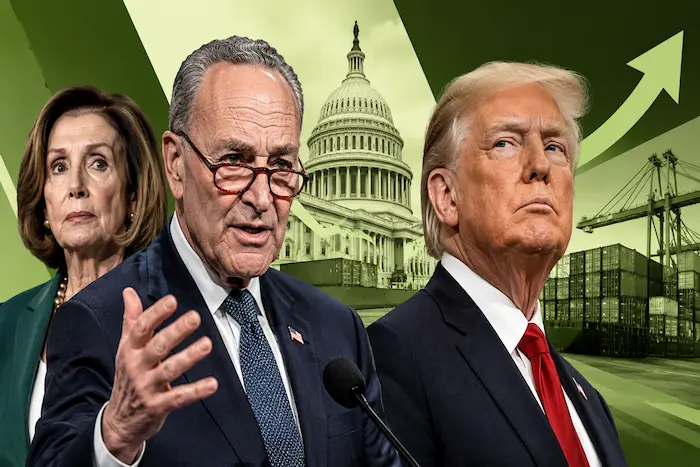
Democrats plan to challenge President Donald Trump’s economic policies through congressional hearings when they take control of Congress in January. Their priorities include reviewing sweeping import tariffs, examining tax cuts, restoring healthcare subsidies, and investigating major government investment agreements. The effort follows Republican losses in the midterm elections, as voters increasingly focus on affordability and rising living costs.
🚨🇺🇸 JUST IN: Democrats plan hearings to unwind Trump's tariffs and tax cuts once they take Congress in January.
Trump's response: "I'm going to veto them." pic.twitter.com/BinEGODFU6
— Cointelegraph (@Cointelegraph) November 22, 2026
Democrats Prepare Congressional Challenge to Trump’s Trade Policies
Richard Neal, the leading Democrat on the House Ways and Means Committee, plans hearings covering Trump’s full range of tariffs. He is expected to become the committee’s chairman when the new Congress begins in January.
The proposed review will examine Trump’s baseline 10% import tariffs and additional duties on steel, aluminium, automobiles, and Canadian products. Neal also wants lawmakers to assess how these measures affect American agriculture and manufacturing.
He admitted that purposeful tariffs can have a legitimate economic function. He, however, raised doubts about Trump’s decision to levy 50% duties on Brazil for political differences. He also took to the social media to attack any restrictions on imports from Canada after a row with Prime Minister Mark Carney.
Meanwhile, the Democrats want Congress to take back its role in trade policy. Their idea would test the president’s authority to implement sweeping import tariffs without greater legislative oversight.
Tax Cuts and Healthcare Become Early Priorities
In addition to trade, Democrats plan to look at Trump’s tax policies and how they will impact the Federal finances. Neal believes that significant tax cuts have played a significant role in the US budget deficit.
Recovering Affordable Care Act funds is also high on the party’s economic agenda. The previous premium tax credits helped some 22 million Americans afford health insurance.
Their restoration was an early consideration, said Neal. He also would like legislators to push back against cuts to hospital funding and consider the possible impact on access to health care.
A key priority for House Democratic Leader Hakeem Jeffries is healthcare affordability. He has vowed to seek a bill to repeal the Republican cuts to Medicaid and to renew health care benefits. Other proposals include increasing the federal minimum wage from $7.25 to approximately $15 per hour. The minimum wage has remained unchanged since 2009.
Jim Kessler, executive vice-president for policy at Third Way, argues that Democrats should combine immediate affordability measures with longer-term economic reforms. He also supports expanding the child tax credit and introducing permitting reforms.
Universal childcare has emerged as another potential legislative priority. Angel Padilla of the National Women’s Law Center expects Democrats to place childcare legislation among their early proposals.
Congressional Oversight Could Intensify Pressure on Trump
Although Democrats expect to hold majorities in both chambers, their legislative ambitions face significant obstacles. Trump has already threatened to veto bills that challenge his administration’s policies.
Overriding a presidential veto requires a two-thirds majority in both the House and Senate. Consequently, Democrats may struggle to reverse major economic measures through legislation alone.
However, congressional control gives Democrats substantial investigative authority. Their committees can organize public hearings, demand government records, and issue subpoenas when necessary.
Neal will also be exploring investment deals with South Korea, Japan, and the Gulf. He feels that Congress should know what they are signing, just as he wants to know what they are signing.
The sweeping campaign may be broader in its scope to include economic policy. Democratic lawmakers have shown interest in investigating allegations of corruption, presidential pardons, immigration enforcement and Trump’s dealings with his family.
House Oversight Committee chairman Robert Garcia (D-Calif.), a man expected to be bold after the election, indicated so. When he saw the Democrats were likely to win, he replied, “Lawyer up.
Yet the administration has denied any wrongdoing in respect of presidential pardons. Attorney General Todd Blanche has previously argued that the president has the constitutional powers to grant clemency for the president without giving reasons.
Economic Pressures Shape the Democrats’ Wider Strategy
The party’s agenda reflects growing public frustration with household expenses. Democrats campaigned on reducing grocery, housing, healthcare, and energy costs.
The Iran conflict has also become part of their economic argument. Pentagon budget official Arthur Miller told senators that the war had cost taxpayers approximately $48.3 billion by November 13.
The war has thrown a spanner in the works of energy markets and bringing pressure to fuel and fertilizer prices. In addition, limitations on shipping traffic around the Strait of Hormuz have added to the difficulties of international commerce.
Democrats thus demand the end of the war. But repair of damaged infrastructure and restoration of supply chains may take months or years, says energy analysts.
Another challenge, however, is trade policy. Trump’s tariffs have proven to be a complete economic failure, and they need to be addressed quickly, says Ed Gresser of the Progressive Policy Institute.
He also voiced concern about the tariffs proposed by the administration on Canadian cars and steel that would be 50%. Trump has said those responsibilities will begin on Jan. 1, 2027.